Building Safety Act Duties: Buildings Under 11 Metres
Under-11-metre blocks fall outside the higher-risk regime, but Fire Safety Order, health and safety and building regulation duties still apply in full.
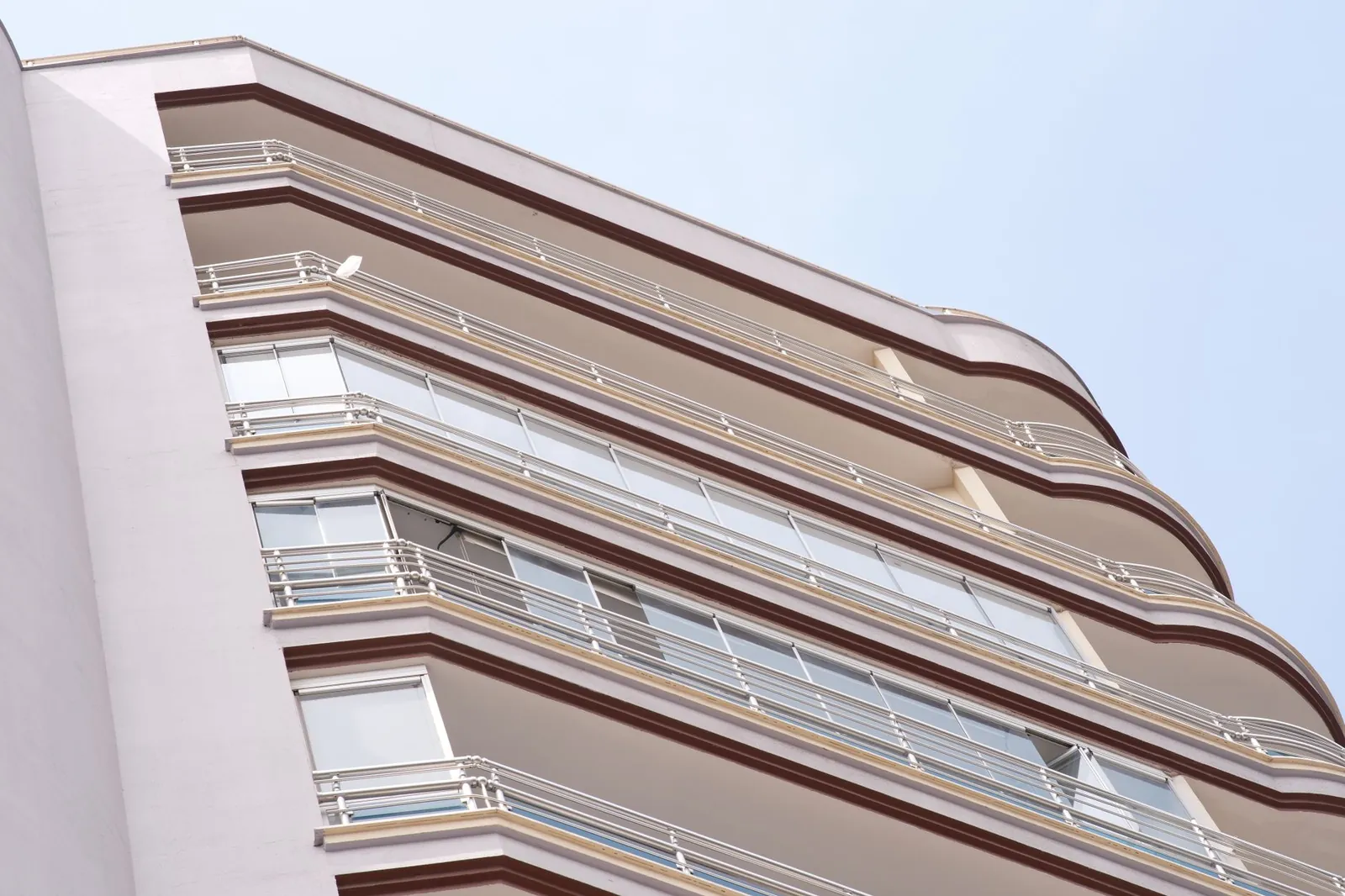
Photo: Doğan Alpaslan Demir / Pexels
A block under 11 metres sits outside the higher-risk building regime in Part 4 of the Building Safety Act 2022: no registration with the Building Safety Regulator, no accountable person, no safety case report, no building assessment certificate. Everything else stays: the Fire Safety Order, general health and safety law, the duty to manage asbestos, the building regulations dutyholder rules and your lease obligations. Reading “not higher-risk” as “not regulated” is the expensive mistake.
Where the 11 Metre Line Comes From
There is no single legal threshold at 11 metres. The figure appears in several regimes, each with its own wording, and they do not line up.
Section 65 of the Building Safety Act 2022 defines a higher-risk building for the occupation regime as a building in England that is at least 18 metres in height or has at least seven storeys, and contains at least two residential units. That is the 18 metre line, not the 11 metre one.
Section 117 sets a different threshold for the leaseholder protections. A relevant building is a self-contained building, or self-contained part of a building, in England with at least two dwellings, which is at least 11 metres high or has at least five storeys. It also excludes buildings whose freehold is leaseholder owned, buildings on commonhold land, and buildings where rights of first refusal, compulsory acquisition or collective enfranchisement have been exercised.
Elsewhere the numbers shift again. Regulation 10(4) of the Fire Safety (England) Regulations 2022 uses “above 11 metres”, Approved Document B has required sprinklers in new blocks of flats above 11 metres since the 2020 amendment, and regulation 7(2) of the Building Regulations 2010 restricts external wall materials to class A2-s1, d0 or better only for buildings with a storey at least 18 metres above ground level.
So measure before you assume. The 2022 Regulations measure height in accordance with Approved Document B and treat a mezzanine as a storey where its internal floor area is at least half that of the largest storey that is not below ground level. Count storeys separately: a squat five-storey block under 11 metres is outside the higher-risk regime but inside the leaseholder protections.
What Does Not Apply Below 11 Metres
Read the left column as your building if it is under 11 metres with fewer than five storeys.
| Duty | Under 11m | Above 11m, below 18m and 7 storeys | 18m or 7 storeys and above |
|---|---|---|---|
| Recorded fire risk assessment covering structure, external walls and flat entrance doors (Fire Safety Order, articles 6 and 9) | Applies | Applies | Applies |
| Fire safety and fire door information for residents (2022 Regulations, regulations 9 and 10(1) to (3)) | Applies | Applies | Applies |
| Flat entrance door checks yearly, communal fire door checks at least every three months (regulations 10(4) and 10(6)) | No | Applies | Applies |
| Building emergency evacuation plan and residential PEEPs (2025 Regulations, from 6 April 2026) | No | Only with a simultaneous evacuation strategy | Applies |
| Secure information box, plans, monthly lift checks, wayfinding signage (regulations 4 and 6 to 8) | No | No | Applies |
| Registration, safety case report, building assessment certificate (sections 77, 78, 81, 85) | No | No | Applies |
| Leaseholder protections against historical remediation costs (section 117 onwards) | No, unless it has at least five storeys | Applies | Applies |
| Restriction on external wall materials for new work (regulation 7(2)) | No | No | Applies at 18m |
The Building Safety Regulator reviewed the higher-risk definition on 17 December 2025 and recommended no change, noting that lowering it to 11 metres would add roughly 71,000 to 79,000 buildings. Plan on the current thresholds holding.
The Fire Safety Order Applies at Any Height
The Regulatory Reform (Fire Safety) Order 2005 has no height threshold. Article 3 makes the responsible person the person in control of the premises in connection with a trade, business or other undertaking, or the owner where there is no such person. For a block that is normally the freeholder, the resident management company or the RTM company. Appointing a managing agent does not move the duty.
Section 1 of the Fire Safety Act 2021 inserted article 6(1A), putting beyond argument that in a building with two or more sets of domestic premises the Order covers the structure and external walls, the common parts, and all doors between the domestic premises and the common parts. Article 6(1B) confirms external walls include doors, windows and anything attached to the exterior, including balconies.
What Section 156 Changed for Small Blocks
Section 156 of the Building Safety Act 2022 amended the Fire Safety Order from 1 October 2023, at every height. Article 9(6) requires the responsible person to record the assessment or review, and article 9(7) requires that record to include the findings, the measures taken or to be taken, and any group identified as especially at risk. The old carve-out for small undertakings is gone.
Article 9A, which would require anyone appointed to assist with the assessment to be competent, sits in section 156(4) and has not been commenced, so it is not yet a duty. The live requirement is article 18: the responsible person must appoint one or more competent persons to assist in undertaking the preventive and protective measures, competence meaning sufficient training and experience or knowledge and other qualities. Article 21A requires comprehensible fire safety information for residents, and article 22A requires an outgoing responsible person to hand the fire safety records to their successor, which matters whenever a block changes freeholder or agent.
There is no statutory interval. Article 9(3) requires regular review to keep the assessment up to date, in particular where there is reason to suspect it is no longer valid or there has been a significant change, which means a scheduled cycle plus trigger-based reviews. Our note on fire risk assessments for blocks of flats sets out how that works in practice.
The 2022 Regulations That Still Apply
Regulation 9 of the Fire Safety (England) Regulations 2022 applies to any building with two or more sets of domestic premises and common parts residents would evacuate through. Instructions covering the evacuation strategy, how to report a fire and what to do if one occurs must be displayed conspicuously, given to new residents as soon as reasonably practicable, given to all residents within each 12 month period, and reissued after a material change.
Regulation 10(1) to (3) also applies to those buildings, requiring residents to be told to keep fire doors shut and not to tamper with self-closing devices. Regulations 10(4) and 10(6) add the checking regime above 11 metres: flat entrance doors at least every 12 months on a best endeavours basis under paragraph (4), communal fire doors at least every three months under paragraph (6). Below 11 metres you still owe residents the information, and your assessment may still call for door inspections, but those frequencies are not imposed on you.
The Fire Safety (Residential Evacuation Plans) (England) Regulations 2025 came into force on 6 April 2026 and cover buildings of at least 18 metres or seven storeys, and buildings more than 11 metres high with a simultaneous evacuation strategy. Under-11m blocks are outside them, so there is no duty to prepare a building emergency evacuation plan or offer person-centred fire risk assessments. Many directors still do a proportionate version, as our piece on evacuation plans and PEEPs explains.
Enforcement does not change with height either. Under article 25 the enforcing authority is the fire and rescue authority for the area, and article 32 makes it an offence to fail to comply with articles 8 to 22B where that failure places relevant persons at risk of death or serious injury from fire, carrying on indictment an unlimited fine, up to two years imprisonment, or both.
Health and Safety Duties Have No Height Threshold Either
Section 4 of the Health and Safety at Work etc. Act 1974 imposes duties on those in control of non-domestic premises towards people who are not their employees but use the premises as a place of work, which is what contractors in your common parts are doing. The duty is to take reasonable measures to ensure, so far as is reasonably practicable, that the premises, the means of access and egress and any plant in them are safe. Section 4(3) treats anyone with a contractual obligation for maintenance, repair or safety as in control, which is the position of an RMC under a typical lease.
Regulation 4 of the Control of Asbestos Regulations 2012 places the duty to manage asbestos in non-domestic premises on whoever has a contractual obligation for maintenance or repair, and extends it to the means of access and egress. It requires an assessment, a record, review when circumstances change, and where asbestos is present a written plan covering monitoring, safe maintenance or removal, and information for anyone liable to disturb it.
Water systems, communal electrical installations and lifts each carry their own regime, none of which turns on the 11 metre line. They belong in the same compliance programme as the fire duties.
One genuine exclusion is worth naming. The Smoke and Carbon Monoxide Alarm (England) Regulations 2015 apply to specified tenancies, and the Schedule excludes long leases and tenancies of seven years or more, so a long leaseholder’s own flat is outside them. A leaseholder who sublets on a shorter tenancy is caught as landlord.
Building Work: The Dutyholder Rules Apply at Any Height
Part 2A of the Building Regulations 2010, inserted by the Building Regulations etc. (Amendment) (England) Regulations 2023, applies to all building work in England from 1 October 2023, not only higher-risk buildings. It makes clients, principal designers, designers, principal contractors and contractors dutyholders, and requires each to have the competence for the work they take on.
For an RMC this bites as client: it must take all reasonable steps to appoint designers and contractors with the necessary competence or organisational capability, whether the block is 9 metres or 30 metres tall. What under-11m buildings avoid is the Building Safety Regulator acting as building control body and the gateway approvals that go with higher-risk work.
Paying for Remediation When the Protections Do Not Apply
Because the block is not a relevant building under section 117, Schedule 8 does not cap what qualifying leaseholders can be charged. Government guidance states that buildings under 11 metres are less likely to need costly fire safety works because the risk to life is lower, and that cheaper measures such as fire alarms are often more appropriate where work is needed.
Before accepting a large external wall bill, check the assessment behind it. The same guidance tells residents to check the work rests on a fire risk assessment including a fire risk appraisal of external walls to PAS 9980:2022. An appraisal to that standard, by someone competent, is the difference between a proportionate outcome and an expensive one. Ask to see it before agreeing to anything.
Routes That Are Still Open
- Funding. A targeted fund for buildings under 11 metres is delivered by Homes England through the Cladding Safety Scheme. The window opened on 17 August 2026 and closes on Friday 9 October 2026. Applications go through the Building Remediation Hub from the responsible entity, not from leaseholders, and a FRAEW is required. Buildings need two or more dwellings, funding is tenure neutral, and buildings where works started before 9 July 2026 are not eligible. The government calls it targeted, not a commitment to fund every eligible building.
- Claims against those responsible. Section 135 of the Building Safety Act inserted section 4B into the Limitation Act 1980, giving a 15 year limitation period for claims under section 1 or 2A of the Defective Premises Act 1972 and section 38 of the Building Act 1984, extended to 30 years where the right of action under section 1 accrued before the commencement date of 28 June 2022. None of that turns on height.
- Building liability orders. Section 130 lets the High Court, where just and equitable, extend a relevant liability of one body corporate to associated companies. Relevant liabilities include those under the Defective Premises Act 1972 or section 38 of the Building Act 1984, or arising from a building safety risk. It is not restricted to relevant buildings and reaches dissolved companies.
- Warranties and insurance. Government guidance points to new-build home warranties where the building is under 10 years old, and to buildings insurance.
If the cost lands in the service charge, the statutory consultation regime applies as usual. Regulation 6 of the Service Charges (Consultation Requirements) (England) Regulations 2003 sets the trigger at qualifying works where one leaseholder’s relevant contribution would be more than £250.
What a Director of an Under-11m Block Should Do
- Record the height and storey count, measured the way Approved Document B measures it. That decides which duties bind you.
- Check the fire risk assessment is recorded in full, covers the structure, external walls, balconies and flat entrance doors, and names groups especially at risk.
- Confirm who the responsible person is, and that the company understands the duty sits with it, not the agent.
- Check residents received fire safety and fire door information within the last 12 months, and that new occupiers get it on arrival.
- Check the asbestos survey and written management plan for the common parts are current.
- If there is any external wall concern, get a FRAEW to PAS 9980:2022 before commissioning works, and check whether the fund applies while it is open.
- For alterations, appoint dutyholders against the Part 2A competence requirements and record how you assessed them.
Where the position is unclear, an independent view helps. Plymouth Block Management offers building safety consultancy for buildings under 11 metres and accredited fire door inspections, and property managers inspect managed blocks formally every three months. If you are a director working out whether your block needs anything beyond a competent fire risk assessment, have that conversation before spending money on works.
Common Questions
The questions directors ask most often about blocks below the higher-risk threshold.
Do We Have to Check Flat Entrance Fire Doors Every Year?
Not as a statutory duty at 11 metres or lower. Regulation 10(4) of the Fire Safety (England) Regulations 2022 applies above 11 metres and requires annual best endeavours checks of flat entrance doors, and regulation 10(6) requires communal fire door checks at least every three months. Regulation 10(1) to (3), which requires residents to be told to keep fire doors shut and not to tamper with closers, applies to every building with two or more sets of domestic premises.
Are Leaseholders in Our Building Protected from Cladding Costs?
Only if the building is at least 11 metres high or has at least five storeys, the definition of a relevant building in section 117 of the Building Safety Act 2022. A four-storey block under 11 metres falls outside, so Schedule 8 does not cap what leaseholders can be charged. Storeys count independently of height, so a five-storey building under 11 metres does qualify.
Can Our Building Apply for Government Funding for Unsafe Cladding?
Possibly. A targeted fund for buildings under 11 metres is delivered by Homes England through the Cladding Safety Scheme. Applications opened on 17 August 2026 and close on Friday 9 October 2026, must come from the responsible entity through the Building Remediation Hub, and must be supported by a fire risk appraisal of external walls to PAS 9980:2022. Buildings where works started before 9 July 2026 are not eligible.
Who Enforces Fire Safety in a Block Under 11 Metres?
The fire and rescue authority for the area, under article 25 of the Fire Safety Order. Article 32 makes it an offence for a responsible person to fail to comply with articles 8 to 22B where that failure puts relevant persons at risk of death or serious injury from fire, punishable on indictment by an unlimited fine, up to two years imprisonment, or both.
Sources: Building Safety Act 2022 section 65, section 117 and section 156; Regulatory Reform (Fire Safety) Order 2005 article 9; Fire Safety (England) Regulations 2022; Fire Safety (Residential Evacuation Plans) (England) Regulations 2025; GOV.UK buildings under 11 metres fund overview; Building Safety Regulator review of the definition of higher-risk buildings. Also used: Fire Safety Act 2021 section 1, Health and Safety at Work etc. Act 1974 section 4, Control of Asbestos Regulations 2012 regulation 4, Service Charges (Consultation Requirements) (England) Regulations 2003 regulation 6, and GOV.UK guidance for residents on fire safety and remediation.