
Higher-Risk Buildings: Registration, Duties and Certificates
The 18 metre or 7 storey test, who the accountable person is, how registration with the Building Safety Regulator works, and what a safety case must show.
Plymouth Block Management is an ISO 9001:2015 certified managing agent (certificate FS 685565, audited by BSI) and a member of The Property Ombudsman, managing residential blocks across Devon, Cornwall and the wider South West.
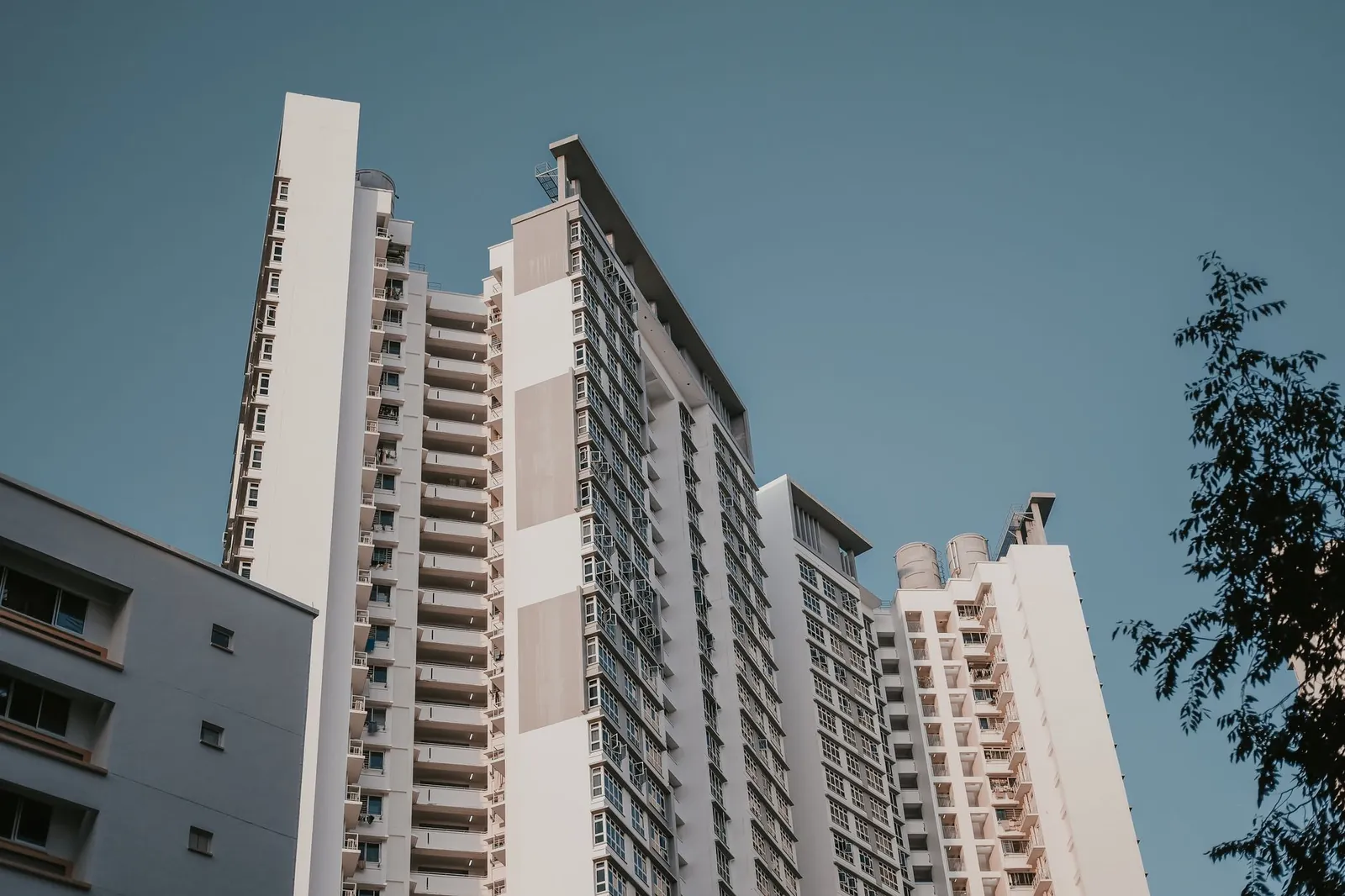
Photo: Faheem Ahamad / Pexels
A higher-risk building is one in England that is at least 18 metres in height or has at least 7 storeys, and contains at least 2 residential units. If your block meets that test, the principal accountable person must register it with the Building Safety Regulator, assess and manage the fire and structural safety risks, hold a safety case report, and apply for a building assessment certificate when directed to. Here is who does what, by when, and what it costs.
Which Buildings Are in Scope
The definition is in section 65 of the Building Safety Act 2022: a building in England that is at least 18 metres in height or has at least 7 storeys, and contains at least 2 residential units.
Two things catch people out. The size test is an either/or, so a seven storey block measuring 17 metres is in scope on storeys alone. And a residential unit means a dwelling or any other unit of living accommodation, whatever the tenure: leasehold flats, mixed blocks and student accommodation all count.
Buildings used entirely as care homes, hospitals, secure residential institutions, hotels or military barracks are excluded, as is armed forces accommodation. Note the asymmetry: care homes and hospitals sit outside the occupation duties described here, but remain within the higher-risk building control regime under the Building Act 1984.
Below the threshold, none of these duties apply. That does not leave a building unregulated, and there is separate guidance on what the Building Safety Act means for buildings under 11 metres.
| Element | Requirement |
|---|---|
| Location | England |
| Height | At least 18 metres, measured to the top floor surface of the top storey |
| Storeys | At least 7, counted at or above ground level |
| How they combine | Either limb is enough; both are not required |
| Residential units | At least 2 dwellings or other units of living accommodation |
| Excluded uses | Care homes, hospitals, secure residential institutions, hotels, military barracks |
How Height and Storeys Are Counted
The counting rules sit in the Higher-Risk Buildings (Descriptions and Supplementary Provisions) Regulations 2023. They matter because a block can sit within a metre of the threshold and the method decides whether the whole regime applies.
- Height runs from ground level to the top of the floor surface of the top storey, not to the parapet or ridge.
- Where the ground slopes, measurement is from the lowest part of the ground adjacent to the building.
- A storey containing only roof-top plant or machinery is ignored.
- Storeys below ground level do not count towards the 7.
- A gallery counts as a storey only if its internal floor area is at least 50 per cent of the largest storey directly above or below it.
- Government guidance says an open roof-top or roof garden is not a storey, but a First-tier Tribunal decision of 3 July 2024 went the other way and the government is consulting on amending the regulations to put the point beyond doubt.
If your building is close to either line, have the measurement taken properly and keep it with the drawings.
Who the Accountable Person Is
Under section 72, an accountable person holds a legal estate in possession in any part of the common parts, or is under a relevant repairing obligation for any part of them. Section 73 identifies one of them as the principal accountable person: the one responsible for the structure and exterior.
In a typical leasehold block in Devon or Cornwall that will be the freeholder, the resident management company or the right to manage company, depending on who owns the common parts and who carries the repairing covenant. Regulator guidance also lists landlords, management companies and commonhold associations.
A managing agent cannot be the accountable person. Government guidance is explicit that accountability stays with whoever owns the common parts or has the legal obligation to repair them under a lease. An agent can prepare the documents and deal with the regulator; the duty and the criminal liability remain with the company, alongside directors’ wider duties under the Companies Act.
A building can have more than one accountable person, for example where a freeholder retains the structure and an RTM company holds the internal common parts. The one responsible for structure and exterior is the principal accountable person. The others keep their own assessment, information and reporting duties.
Registering the Building
Section 77 makes it an offence for the principal accountable person if an occupied higher-risk building is not registered, unless there is a reasonable excuse. On indictment the penalty is up to two years’ imprisonment or a fine or both, with a further daily fine at level 1 on the standard scale for each day the default continues after conviction.
Registration is made to the Building Safety Regulator and costs £251 per building. It asks for the name, address and postcode; height in metres, number of floors, number of residential units and completion date; contact details for every accountable person; and, for buildings completed from 2023 onwards, the completion or final certificate details. Where a building has several structures, that summary is given for each.
You then have 28 days from submitting the application to give the regulator the key building information: fire and smoke controls; energy supply, storage and generation; structure type, roof, staircases and external wall materials; the use of the building; work carried out since construction; and connections to neighbouring structures. Most of it can be taken from the current fire risk assessment or external wall appraisal.
The register is public and searchable by postcode, showing the accountable persons and, for each structure, height, floors and year built. Under section 90 of the Act, with the detail prescribed by regulation 9 of the Higher-Risk Buildings (Management of Safety Risks etc) (England) Regulations 2023, a change of accountable person must be notified to the regulator as soon as reasonably practicable, with the registration number, the date responsibility ceased and the incoming party’s details. That is the step most often missed when a block changes freeholder or completes a right to manage claim.
The Duties That Follow Registration
Registration is the entry point, not the finish line. The substantive duties sit in sections 83 to 91 of the Act and in the 2023 regulations, and they run continuously.
| Duty | Who carries it | Timing |
|---|---|---|
| Register the building | Principal accountable person | Before occupation (sections 77 and 78) |
| Give key building information | Principal accountable person | Within 28 days of the registration application |
| Assess the building safety risks | Each accountable person | As soon as reasonably practicable after occupation or appointment (section 83) |
| Manage those risks | Each accountable person | Continuing duty (section 84) |
| Prepare and revise the safety case report | Principal accountable person | As soon as reasonably practicable, then when revision is needed (section 85) |
| Notify a new or revised report | Principal accountable person | As soon as reasonably practicable (section 86) |
| Report a safety occurrence | Accountable person for the part affected | Notice as soon as reasonably practicable, full report within 10 days (section 87) |
| Residents’ engagement strategy | Principal accountable person | Consult for at least 3 weeks; review at least every two years |
| Display notice, certificate and compliance notices | Principal accountable person | Conspicuous position in the building (section 82) |
| Notify a change of accountable person | Accountable persons | As soon as reasonably practicable |
Set up mandatory occurrence reporting before you need it. Regulation 6 defines a safety occurrence as an incident or situation relating to structural integrity or the spread of fire which, if left unremedied while the building stayed in use, would risk a significant number of deaths or serious injury to a significant number of people. The accountable person for the affected part gives a short notice as soon as reasonably practicable after the occurrence, then a full report within 10 days beginning with the day it came to their attention.
The residents’ engagement strategy is a written document, not a poster. It must set out how residents are told about works arising from building safety decisions, how they are consulted where works last more than a day and restrict access or cause nuisance, how responses are weighed, and how reviews are recorded. Review it at least every two years, after any mandatory occurrence report, and after significant material alteration. Evacuation arrangements and personal emergency evacuation plans sit alongside it.
Underneath all of it is the information duty: accountable persons must keep prescribed building information and documents and provide them to the regulator, residents, owners and the fire and rescue authority when required. That means an organised, current and transferable record set, which is what the golden thread of building information is meant to deliver.
The Safety Case Report
Section 85 requires the principal accountable person to prepare a safety case report as soon as reasonably practicable after the building becomes occupied or after they take on the role, whichever is later. It sets out the assessment of the building safety risks and the steps taken to manage them. Section 86 requires the regulator to be notified as soon as reasonably practicable after it is prepared or revised, and a copy given on request.
Building safety risks here are narrower than general health and safety. Regulator guidance describes them as the risk of the spread of fire or smoke in the building and the risk of structural failure. Lifts, legionella and asbestos belong in the safety case only where they bear on fire spread or structural failure.
Guidance on preparing a safety case report asks for basic building information including registration number, height, storeys, floorplans and resident profile; the responsible parties; construction methods and materials; structural condition and survey findings; building work and remediation history; the fire safety measures, covering compartmentation, fire doors, smoke control, escape routes, detection and any sprinklers; the risk assessments, with methodology and findings; the emergency plan and evacuation strategy; and the safety management system.
Draw on the current fire risk assessment rather than duplicating it, and be honest about what is not yet known. A safety case that claims certainty about a cavity barrier nobody has opened up will not survive scrutiny.
Building Assessment Certificates
You do not apply for a building assessment certificate when you feel ready. Under section 79 the regulator directs the principal accountable person to apply, and the application must be made within 28 days beginning with the day the direction is given. Failing to apply without reasonable excuse carries the same penalties as the registration offence.
The application requires you to confirm the information the regulator holds is current and to upload the safety case report, details of the mandatory occurrence reporting system, the residents’ engagement strategy, the serial numbers of any active compliance notices, and confirmation that building information has been given to those entitled to it.
Under section 81 the regulator must grant the certificate if satisfied that the relevant duties are being complied with. Those are the duties under sections 83, 84, 85, 87(5), 89 and 91, and under prescribed regulations made under them. Where a contravention can be remedied it may allow a period to put it right and then grant. Section 82 requires the principal accountable person to display, together and conspicuously, a prescribed notice about the accountable persons, the most recent certificate and any relevant compliance notice. Not displaying them is an offence.
The programme has been difficult. On 9 July 2026 the regulator announced a more proportionate and targeted approach, saying it would only call in new applications when necessary until improved processes are agreed with duty holders. It had directed applications for nearly 2,000 buildings since April 2024, 66 per cent of applications had been refused so far that year, and more than 6,000 accountable persons carry these duties across England. It accepted that many volunteer-led resident management, commonhold and right to manage organisations had struggled, and said smaller volunteer-run companies would get more time to prepare evidence.
Read that carefully. The regulator changed how and when it calls applications in; it did not change the duties. Sections 83 to 91 apply whether or not you have been directed, and a building never called in still needs a current safety case report.
Two structural changes are worth noting. On 27 January 2026 the Building Safety Regulator moved from the Health and Safety Executive to a standalone non-departmental public body sponsored by the Ministry of Housing, Communities and Local Government. On 17 December 2025 the government published the regulator’s initial review of the definition, which recommended no change to the 18 metre and 7 storey test for now.
What It Costs and What to Do Next
Under the charging scheme for 2026 to 2027, registration costs £251 per building, a certificate application costs £312 plus £156 per hour of regulator staff time, and the regulator charges £156 per hour to review a safety case report during occupation or investigate a potential risk. Those are its charges only. The larger cost is the work behind the safety case: structural review, fire engineering input, intrusive investigation and document assembly.
Whether those costs reach leaseholders depends on what the lease says, so read the service charge clauses before committing. Where they are recoverable, put them in the budget as a named line rather than absorbing them into general management, and fund the multi-year items from reserves.
If you direct an RMC or RTM company with a building at or near the threshold, the sequence is: confirm the measurement, confirm who holds the common parts and the repairing obligation, check the register entry, then look honestly at whether your safety case would stand up. Plymouth Block Management offers independent building safety consultancy and accredited fire door inspections, and can tell you which of those is missing.
Common Questions
The queries that come up most often from directors of blocks near the threshold.
Our Block Is 17.5 Metres with 6 Storeys. Are We in Scope?
No. Section 65 requires at least 18 metres in height or at least 7 storeys, and a building failing both limbs is outside the occupation regime. Check the measurement first, because height runs from ground level to the top of the floor surface of the top storey and is taken from the lowest adjacent ground level where the site slopes. A figure of 17.5 metres taken to the parapet may be wrong.
Can Our Managing Agent Be the Accountable Person?
No. Government guidance states that accountability remains with whoever owns the common parts or has the legal obligation to repair or maintain them under a lease. An agent can prepare the registration, assemble the safety case and deal with the regulator on your behalf, but the accountable person and principal accountable person remain the company or freeholder, and the offences in sections 77, 79 and 82 attach to them.
What Happens If the Building Was Never Registered?
The principal accountable person commits an offence under section 77 where an occupied higher-risk building is not registered, subject to a reasonable excuse defence. On indictment the penalty is up to two years’ imprisonment or a fine or both, with a further daily fine at level 1 on the standard scale after conviction. If you find an unregistered building, register it now and record when you discovered the position and what you did.
Does the July 2026 Announcement Mean We Can Pause Work on Our Safety Case?
No. The regulator changed which applications it calls in and gave smaller volunteer-run resident management companies more time to prepare evidence. The duties in sections 83 to 91, including assessing the building safety risks, taking all reasonable steps to manage them and holding a current safety case report, apply whether or not a direction has been issued.
Is the 18 Metre and 7 Storey Threshold Likely to Change?
Not immediately. The government published the regulator’s initial review of the definition on 17 December 2025 and it recommended no change at this time, concluding there was not enough evidence to widen or narrow the scope while the regime is still bedding in. It committed to reconsidering the evidence at least once a year, and a five-year review of the Building Safety Act 2022 is due in 2027.
Sources
Everything above is taken from these, not from a summary of them:
- Building Safety Act 2022, section 65: meaning of higher-risk building legislation.gov.uk
- Building Safety Act 2022, section 77: registration of occupied higher-risk buildings legislation.gov.uk
- Building Safety Act 2022, section 79: applications for building assessment certificates legislation.gov.uk
- Building Safety Act 2022, section 81: grant of building assessment certificate legislation.gov.uk
- Building Safety Act 2022, section 82: display of certificate and notices legislation.gov.uk
- Building Safety Act 2022, section 85: safety case report legislation.gov.uk
- Building Safety Act 2022, section 86: notification and provision of report legislation.gov.uk
- The Higher-Risk Buildings (Descriptions and Supplementary Provisions) Regulations 2023 legislation.gov.uk
- The Higher-Risk Buildings (Management of Safety Risks etc) (England) Regulations 2023 legislation.gov.uk
- Register a high-rise residential building GOV.UK / Building Safety Regulator
- Applying to register a high-rise residential building GOV.UK / Building Safety Regulator
- Criteria for being a higher-risk building during the occupation phase GOV.UK
- Safety in high-rise residential buildings: accountable persons GOV.UK / Building Safety Regulator
- Preparing a safety case report GOV.UK / Building Safety Regulator
- Apply for a building assessment certificate GOV.UK / Building Safety Regulator
- BSR to introduce more proportionate and targeted approach for higher-risk building assessments GOV.UK / Building Safety Regulator
- Building Safety Regulator charging scheme 2026 to 2027 GOV.UK / Building Safety Regulator
- Building Safety Regulator strategic plan 2026 to 2027 GOV.UK / Building Safety Regulator
- Definition of higher-risk buildings: initial review and plans for ongoing review GOV.UK / Ministry of Housing, Communities and Local Government
- Find a high-rise residential building GOV.UK / Building Safety Regulator
- Building Safety Act 2022, section 62: meaning of building safety risk legislation.gov.uk
- Building Safety Act 2022, section 72: meaning of accountable person legislation.gov.uk
- Building Safety Act 2022, section 73: meaning of principal accountable person legislation.gov.uk
- Building Safety Act 2022, section 78: registration of higher-risk buildings legislation.gov.uk
- Building Safety Act 2022, section 83: duty to assess building safety risks legislation.gov.uk
- Building Safety Act 2022, section 84: management of building safety risks legislation.gov.uk
- Building Safety Act 2022, section 87: mandatory reporting requirements legislation.gov.uk
- Building Safety Act 2022, section 90: provision of information etc on change in accountable person legislation.gov.uk
Spotted something wrong, or something that has moved on? Email move@