EWS1 Forms: A Lending Tool, Not a Safety Certificate
An EWS1 form is a mortgage valuation document, not a fire safety certificate and not a legal duty. What A1 to B2 mean, who signs, and how long it lasts.
Plymouth Block Management is an ISO 9001:2015 certified managing agent (certificate FS 685565, audited by BSI) and a member of The Property Ombudsman, managing residential blocks across Devon, Cornwall and the wider South West.
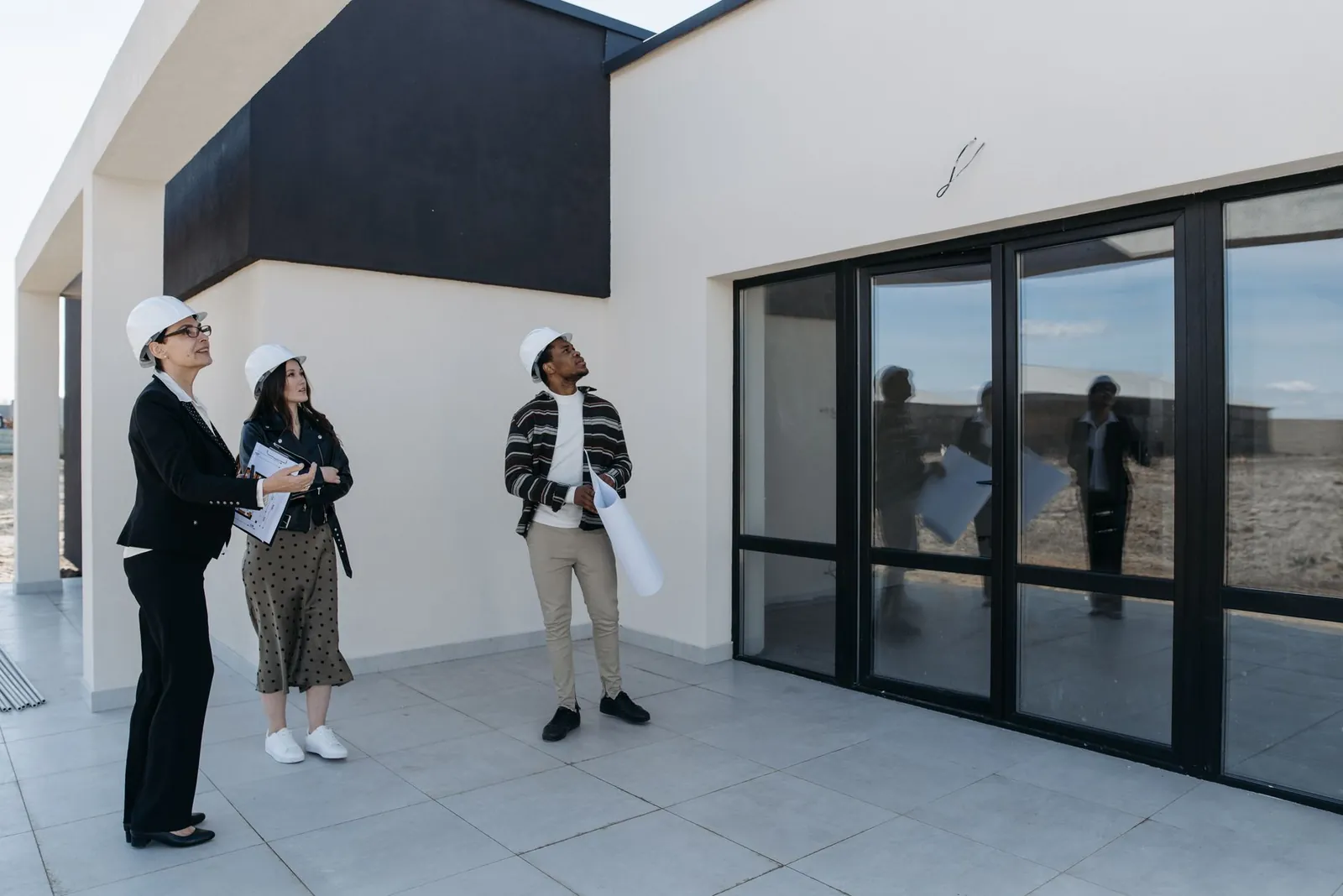
Photo: Pavel Danilyuk / Pexels
An EWS1 form tells a mortgage valuer whether the external walls and balconies of a block of flats are likely to need fire safety remediation that would affect value. It was created by the lending industry, not by Parliament, and the form itself says it is not a life safety certificate. You need one only when a lender or valuer asks for it, and under the RICS criteria that should happen only where the building meets specific tests on storeys and cladding.
What an EWS1 Form Actually Is
The current version is the 3rd edition, issued on 16 March 2022. It is a set way for a building owner to confirm to valuers and lenders that the external wall system, or an attachment such as a balcony, has been assessed by a suitable expert for the likelihood that remediation will be needed. RICS records that it was developed with government, UK Finance, the Building Societies Association, lenders, chartered fire engineers, developers, managing agents and valuation surveyors.
One form covers one block. The signatory confirms they have used reasonable skill and care to investigate the primary external wall materials, typically insulation, filler and cladding, and the attachments including balconies. The investigation follows the methodology in PAS 9980, and the signatory gives their client a full report that would not normally reach the valuer or lender.
What an EWS1 Form Is Not
Four points cause most of the trouble in practice.
- It is not a safety certificate. The form covers the external wall system only, and says nothing about fire doors, compartmentation, alarms or escape routes.
- It is not a statutory requirement. The legal duty is the fire risk assessment under the Regulatory Reform (Fire Safety) Order 2005. Section 1 of the Fire Safety Act 2021 amended article 6 of that Order so that in a building with two or more flats the structure, the external walls, anything attached to them including balconies, and the flat entrance doors are all covered.
- It is not automatically something a buyer or lender can rely on. It is prepared for the sole and exclusive use of the named client organisation, and no responsibility is accepted to third parties, lenders and buyers included. Reliance has to be sought from the signatory’s firm.
- Its absence is not evidence of safety. RICS is explicit that a decision not to request a form gives no assurance that there are no fire or life safety risks.
One further trap: any amendment to the wording, beyond crossing out the unused option, makes the form invalid.
The Five Outcomes and What Each One Means
The signatory uses Option A or Option B, deletes the other, and ticks one sub-option. Option A is available only where the primary wall materials meet the criteria of limited combustibility or better, as defined in BS 9991:2015, and cavity barriers are correctly installed.
| Outcome | What the signatory confirms | Practical effect |
|---|---|---|
| A1 | Primary materials are of limited combustibility or better, and no attachment holds significant quantities of combustible material. | The cleanest result for a lender. |
| A2 | As A1, but a risk assessment of the attachments confirms no remedial works are needed. | Treated much as A1. |
| A3 | Primary materials pass, but neither A1 nor A2 applies, so there may be potential costs of remedial works to attachments such as balconies. | Signals possible cost. |
| B1 | Combustible materials are present, but the fire risk is sufficiently low that no remedial works are required. | Not a statement that the wall is non-combustible. |
| B2 | Combustible materials are present and the fire risk is high enough that remedial works are required. | Signals cost and a likely delay to sales. |
A3 and B2 both call for the signatory to notify the client that the building fire risk assessment will need to be reviewed in the light of the external wall survey.
Who Is Allowed to Sign
The competence required differs sharply between the two options. Notes 2 and 3 on the form set it out.
For Option A, the signatory should be a qualified member of a relevant construction professional body, able to identify the materials in the external wall and attachments and to judge whether cavity barriers and fire stopping have been installed correctly. Fire engineering expertise is not necessarily required.
Option B demands more. Full members of the Institution of Fire Engineers at CEng or IEng level qualify, as do members of other relevant professional bodies dealing with fire safety and construction products, at or equivalent to that level. Where the top floor finished floor level, excluding plant storeys, is less than 18 metres above the lowest adjacent ground, a qualified member of an eligible professional body who has completed the RICS EWS Assessment Training Programme may also sign.
A valuer is expected to check that the signatory block is complete, that Notes 2 and 3 have been dealt with, and that the form is signed and dated.
When a Valuer Should Ask for One
RICS tells members that requesting a form where there is no visible cladding, or a low risk of remediation, creates delay and diverts a small pool of competent experts from buildings that need them. A member should always have a rationale, and a lender can still instruct its valuers to go further than the criteria.
The RICS criteria came first, with the 1st edition taking effect on 5 April 2021. Major lenders then stepped back from requiring forms below 18 metres after the government statement of 21 July 2021, published with expert advice that there is no systemic risk of fire in blocks of flats under 18 metres.
Under the 2nd edition, no form should be required where the owner has met the Fire Safety Act 2021 requirement for an assessment of the external walls and attachments that raises no concerns, or where a building over 18 metres holds a valid building control certificate under The Building (Amendment) Regulations 2018, or the equivalent in the devolved nations. The 1st edition carries the same building control exemption, but its first limb points instead to the government consolidated advice note, which was withdrawn in January 2022.
The storey criteria are changing. The 1st edition guidance note, effective 5 April 2021, runs until 1 November 2026, when the 2nd edition professional standard takes over. RICS encourages early adoption, so you may meet either set this year.
| Storeys | 1st edition, to 31 October 2026 | 2nd edition, from 1 November 2026 |
|---|---|---|
| More than six | Cladding or curtain wall glazing, or vertically stacked balconies with combustible balustrades and decking, or combustible decking with the balconies linked by combustible material. | Unchanged. |
| Five or six | A significant amount of cladding, ACM, MCM or HPL panels, or the same stacked balcony arrangements. | The ACM, MCM and HPL trigger is dropped. A significant amount of cladding, or the stacked balcony arrangements. |
| Four or fewer | ACM, MCM or HPL panels present. | Only where there is a significant amount of ACM, MCM or HPL panels. |
The definition of a significant amount also shifts: roughly one quarter of the whole elevation under the 1st edition, and under the 2nd, roughly one quarter of the entire facade, or of a single elevation where the cladding links multiple floors or sits around the main escape route. For buildings of six storeys or fewer, no form is needed where the only trigger is cladding on the top storey alone, set back on all sides.
A storey here is any floor or part of a floor visible above ground level, including the ground floor; basements and mezzanines do not count. Both editions exclude masonry, traditional cavity walls and timber frame with a masonry outer leaf, concrete and stone panels from what counts as cladding. Metal panel cladding is a trap, because it looks much like ACM and MCM, so the valuer should get written confirmation from the owner or managing agent that it is not.
The standard does not apply at all to houses, bungalows or developments treated as non-domestic.
Validity, Renewal and Finding an Existing Form
A form is valid for up to five years from its date, and must be reassessed if significant changes are made to the external wall or the attachments. Forms issued under earlier editions stay valid for five years from signature, so any signed before August 2021 has now run out.
The form carries a version control table. An administrative revision, such as correcting a postcode, leaves the original date standing. A revision made because works have changed the outcome requires a new date, so a block moving from B2 to B1 after remediation gets a fresh five years.
If you do not know whether your block has a form, ask your managing agent, then search the Fire Industry Association EWS-1 portal, free to use and searchable by postcode. A current form should also sit in your conveyancing pack alongside the fire risk assessment.
The Misunderstandings That Stall Flat Sales
Most stalled sales come down to one of the following.
- Treating an A1 as proof the building is safe. It speaks only to the primary materials of the external wall and its attachments.
- Assuming a B2 makes the flat unsellable. Where there is a route to remediation, RICS tells valuers they may take that into account, and under Schedule 8, paragraph 8 of the Building Safety Act 2022 no service charge is payable under a qualifying lease for cladding remediation, in a building in England of at least 11 metres or five storeys.
- A leaseholder trying to commission a form for their own flat. It covers a whole block and is addressed to a client organisation.
- Assuming a fire risk appraisal of external walls will not do. From 1 November 2026 a valuer may rely on an FRAEW where its executive summary gives a definite yes or no on remedial works, confirms whether combustible materials are present, and shows the signatory is qualified accordingly.
- Reading the RICS criteria as binding on the lender. They are not: a lender’s own instructions come first.
- Expecting an expired form to be re-signed. Renewal means a fresh assessment.
If remediation is needed, the section 20 consultation route and the leaseholder protections both need working through before any contract is placed, and for buildings under 11 metres the funding position differs again.
What a Director Should Do Next
Establish what you hold: a current fire risk assessment covering the external walls, any PAS 9980 appraisal, and any EWS1 form with its date. If a valuer has asked for a form, ask in writing for their rationale and the criteria they are applying, and send them what you have. If the building does fall within the criteria, commission the assessment through the company rather than leaving sellers to chase it, because one form serves every flat.
Plymouth Block Management provides independent building safety consultancy for buildings under 11 metres and accredited fire door inspections, and can tell you whether an EWS1 request against your block is justified before you spend anything.
Common Questions
What directors and sellers ask most often.
Do I Legally Need an EWS1 Form for My Block?
No. No Act or regulation requires one. The legal duty is the fire risk assessment under the Regulatory Reform (Fire Safety) Order 2005, which since section 1 of the Fire Safety Act 2021 must cover the structure, the external walls and anything attached to them. A form is needed only when a lender or valuer asks.
How Long Is an EWS1 Form Valid?
Up to five years from the date on the form, and it must be reassessed if significant changes are made to the external wall or its attachments. Forms under earlier editions run five years from signature, so any signed before August 2021 has expired.
Can an Individual Leaseholder Commission Their Own EWS1 Form?
Not in any useful way. The form covers one block and is addressed to a client organisation, usually the owner or the resident management company. A leaseholder should ask the managing agent or freeholder whether one exists, and search the free Fire Industry Association EWS-1 portal.
Does a B2 Outcome Mean the Flat Cannot Be Sold?
Not automatically. B2 means the signatory considers the fire risk high enough that remedial works are needed. Where there is a route to remediation RICS tells valuers they may take that into account, and under Schedule 8, paragraph 8 of the Building Safety Act 2022 no service charge is payable under a qualifying lease for cladding remediation, in a building in England of at least 11 metres or five storeys.
Can a PAS 9980 Report Be Used Instead of an EWS1 Form?
Sometimes. From 1 November 2026 the RICS standard lets a member rely on a fire risk appraisal of external walls where its executive summary gives a definite yes or no on remedial works, confirms whether combustible materials are present, and shows the signatory is suitably qualified. Otherwise the valuer should ask for a form.
Our Block Has No Cladding, So Why Is a Valuer Still Asking for a Form?
That request may not be justified. RICS tells members they should always have a rationale, and masonry, traditional cavity walls with a masonry outer leaf, concrete panels and stone panels are excluded from what the standard treats as cladding. Ask the valuer in writing for their reason, and send the fire risk assessment.
Sources
Everything above is taken from these, not from a summary of them:
- Form EWS1: External Wall Fire Review, 3rd edition, issued 16 March 2022 RICS
- Secured lending valuation of properties in multi-storey, multi-occupancy residential buildings with cladding, 2nd edition, May 2026, effective 1 November 2026 RICS
- Valuation of properties in multi-storey, multi-occupancy residential buildings with cladding, 1st edition, March 2021, effective 5 April 2021 RICS
- Fire Safety Act 2021, section 1 legislation.gov.uk
- Building Safety Act 2022, Schedule 8, paragraph 8 legislation.gov.uk
- Code of practice for the fire risk appraisal of external wall construction and cladding of existing blocks of flats published BSI
- Major intervention from government and lenders to support leaseholders, 21 July 2021 GOV.UK
- The Provision of a Portal for EWS-1 Forms Fire Industry Association
- Building Safety Act 2022, section 117 legislation.gov.uk
- Cladding External Wall System (EWS) FAQs RICS
Spotted something wrong, or something that has moved on? Email move@