
Fire Safety (England) Regulations 2022: Fire Door Checks
Regulation 10 of the Fire Safety (England) Regulations 2022 sets quarterly communal fire door checks and annual flat entrance door checks above 11 metres.
Plymouth Block Management is an ISO 9001:2015 certified managing agent (certificate FS 685565, audited by BSI) and a member of The Property Ombudsman, managing residential blocks across Devon, Cornwall and the wider South West.
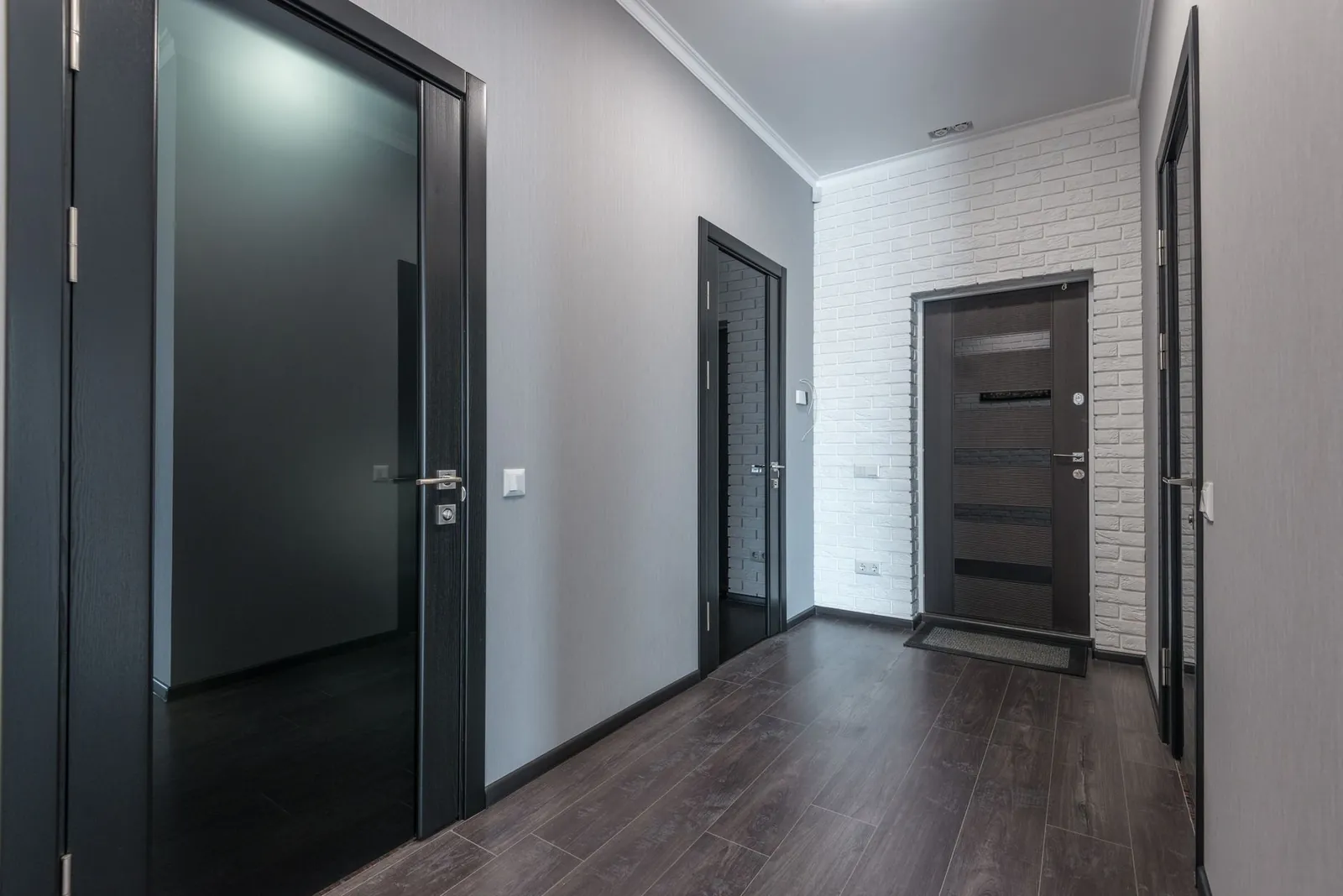
Photo: Max Vakhtbovych / Pexels
Regulation 10 of the Fire Safety (England) Regulations 2022 sets two fixed frequencies. In a residential building in England whose top storey is above 11 metres, the responsible person must check the fire doors in the communal areas at least every three months, and must use best endeavours to check the fire door at the entrance to each flat at least every 12 months. Both checks must include ensuring the self‑closing devices are working.
What Regulation 10 Actually Says
The regulations came into force on 23 January 2023. They extend to England and Wales but apply only in England, so a block in Devon or Cornwall is squarely within them. They were made under article 24 of the Regulatory Reform (Fire Safety) Order 2005 and sit on top of the Fire Safety Order rather than replacing it.
Regulation 10(1) to (3) is the information duty, and it has no height threshold. In any building with two or more sets of domestic premises and common parts residents would evacuate through, the responsible person must tell residents that fire doors should be kept shut when not in use, that residents and guests should not tamper with self‑closing devices, and that faults or damage should be reported immediately. New residents must be told as soon as reasonably practicable after moving in, and all residents within each 12 month period.
Regulation 10(4) and 10(6) are the check duties, and both are limited to buildings above 11 metres containing two or more sets of domestic premises. Regulation 10(5) requires a record of the steps taken on the flat entrance doors, and regulation 10(7) applies to both checks.
| Duty | Which buildings | How often |
|---|---|---|
| Give residents information about fire doors (reg 10(1) to (3)) | Any height, where there are two or more sets of domestic premises and common parts used for evacuation | To each new resident as soon as reasonably practicable, and to all residents within each 12 month period |
| Check fire doors in communal areas (reg 10(6)) | Above 11 metres, two or more sets of domestic premises | At least every 3 months |
| Check fire doors at the entrances to individual flats (reg 10(4)) | Above 11 metres, two or more sets of domestic premises | At least every 12 months, using best endeavours |
| Record the steps taken on flat entrance doors, including access attempts (reg 10(5)) | Above 11 metres, two or more sets of domestic premises | For each 12 month period |
The difference in wording matters. Regulation 10(6) says the responsible person must undertake the communal checks. Regulation 10(4) says the responsible person must use best endeavours, because flat entrance doors sit inside private homes and access cannot be guaranteed. There is no equivalent softening for communal doors: if a stairwell door is missed for six months, the duty has been breached.
Which Buildings Are Above 11 Metres
Regulation 10(8) says the height is calculated to the top storey in accordance with regulation 3(2)(a), which measures to the top storey in accordance with Appendix D to Approved Document B. Government guidance describes the trigger as the top storey being above 11m in height, and adds that this is typically a building of more than four storeys.
Because the measurement runs to the top storey rather than the ridge or parapet, roof form can decide a borderline case. Have the height measured properly, record the method, and keep it with the building’s safety records. It is the first thing an inspecting officer will ask about.
Note also that 11 metres is not the threshold used elsewhere in these regulations. Regulation 3(1) defines a high‑rise residential building as one at least 18 metres above ground level or with at least seven storeys, which triggers secure information boxes, floor plans for the fire and rescue service, wayfinding signage and monthly lift checks. A 14 metre block gets the fire door checks but not those.
What a Check Involves
Government fire door guidance, issued under article 50 of the Fire Safety Order, is direct about the level of detail expected: the checks should be simple and basic, and you should not need to engage a specialist. It says caretakers, managing agents, housing officers and maintenance personnel should be able to do them, given appropriate instruction.
Communal Fire Doors, at Least Every Three Months
These are the doors on the escape route: stairway, lobby and corridor doors, and doors to plant rooms, service cupboards and risers where those are fire doors. Look for:
- Damage or defects that might affect the door’s ability to resist the spread of fire or smoke.
- Damage to intumescent strips or smoke seals, where they are fitted.
- Large gaps around the door.
- The presence of an effective self‑closing device that closes the door properly.
Flat Entrance Fire Doors, at Least Every 12 Months
The list is longer for flat entrance doors, because these are the doors residents alter. Check:
- Whether the door has been replaced, and if so whether it is fire resisting with documentation to show it.
- The letterbox: that it closes firmly and is not jammed, and that any new letterbox is suitable for a fire door.
- Visible damage such as splits, warping or damaged glazing, and any defect affecting fire resistance.
- Glazing, where fitted, to see that fire resisting glass retains its integrity.
- Hinges and ironmongery, looking for loose or missing screws and damaged ventilation grilles.
- Seals and strips: that intumescent strips and smoke seals are undamaged, make contact and have not been painted over.
- Gaps around the door, which the guidance says the industry standard puts at no more than 4mm, other than at the bottom of the door where the gap should be as small as practicable.
- The self‑closing device, which must close the door fully from any angle of opening.
Where a check finds a door needing repair or replacement, the guidance says the work must be done by a competent contractor as soon as reasonably practicable. A check regime only works if it is tied to a repair route with money behind it, which is why fire door remediation belongs in the annual service charge budget rather than arriving as a surprise.
What Best Endeavours Means
The regulations do not define the phrase, and no reported tribunal or court decision on regulation 10 settles it. The Government fact sheet says the responsible person should determine the best approach to engage with residents in order to get access, including agreeing a date so access can be granted, and that where access cannot be obtained, evidence of the attempts made should be retained.
On its ordinary meaning the phrase sits at the demanding end. It is not one letter and a shrug. A defensible approach for a block looks like this:
- Write to every flat with the reason for the check, what it involves and how long it takes, offering a choice of dates.
- Chase non‑responders by a second route: email, the resident portal, a lobby notice, a door knock on the day.
- Offer at least one appointment outside office hours.
- Where a flat is sublet, write to the leaseholder as well as the occupier, since the leaseholder holds the covenants.
- Log each attempt with its date and method, and repeat the cycle rather than treating one refusal as final.
The guidance is blunt about the end of the road: ultimately you might need to consider legal action if a resident persistently refuses to cooperate. Before that, read the lease: most contain a right of entry on notice for inspection and repair, and a covenant against alterations without consent, and both are easier to rely on with a paper trail.
The Records You Have to Keep
Regulation 10(5) requires a record of the steps taken on flat entrance doors, including, where access was not granted during a 12 month period, the steps taken to try to gain access. The guidance suggests a checklist or an electronic system. Keep the same detail for communal doors. For each door, a record that will stand up should show:
- The date of each visit or attempted visit, and who carried it out.
- Whether access was granted, refused, or nobody was home.
- Every attempt to arrange access, with dates and method.
- The findings item by item, rather than a bare pass or fail.
- The defect found, the instruction issued, the contractor used and the completion date.
These Checks Do Not Replace the Fire Risk Assessment
The Government fire door guidance says the checks are not a substitute for periodic assessment of fire doors by fire safety specialists, for example on a sampling basis during fire risk assessments, to make sure that, regardless of whether they meet current standards for new doors, they remain adequate to address fire risk.
That is the distinction directors most often miss. A regulation 10 check answers whether a door is damaged, closing and sealed, not whether it will hold back fire and smoke for long enough. The second question belongs to the fire risk assessment, and in a block relying on stay put and compartmentation it is the question that matters.
Buildings at or below 11 metres fall outside regulation 10(4) and 10(6), but not outside fire safety law. The information duty still applies where there are common parts, and article 17 of the Fire Safety Order requires the responsible person, where necessary to safeguard the safety of relevant persons, to keep the premises and any facilities, equipment and devices under a suitable system of maintenance and in efficient working order and good repair. Fire doors are exactly that. A well run low‑rise block still checks its communal doors on a cycle, because the fire risk assessment says so.
Who Is Responsible, and Who Pays
Article 3 of the Fire Safety Order defines the responsible person: for premises that are not a workplace, the person in control of the premises in connection with carrying on a trade, business or other undertaking, whether or not for profit, or the owner where no such person has control. In a block that usually points to the freeholder, the resident management company or right to manage company, or a combination. Appointing a managing agent does not move the duty off the company.
Flat entrance doors are in scope even though they sit inside a leaseholder’s demise. Section 1 of the Fire Safety Act 2021 inserted article 6(1A) into the Fire Safety Order, so that where a building contains two or more sets of domestic premises the Order applies to the building’s structure and external walls and any common parts, and to all doors between the domestic premises and common parts.
Recovery through the service charge depends on the lease. Most modern leases cover routine safety inspection of the common parts under a repair, maintenance or statutory compliance clause; older leases sometimes do not, and a demised front door is more awkward again, since the repairing obligation for it may sit with the leaseholder. Whatever the lease says, section 19 of the Landlord and Tenant Act 1985 limits recovery to costs reasonably incurred for works of a reasonable standard. A door replaced without permission also raises alterations and consent, which is best handled alongside the safety issue rather than instead of it.
Enforcement, and What to Do Next
The enforcing authority is the fire and rescue authority, under article 25 of the Fire Safety Order. Failing to comply with a requirement imposed by regulations made under article 24, which include regulation 10, is an offence under article 32(1)(b) where that failure places one or more relevant persons at risk of death or serious injury in case of fire. Article 32(3) still reads as a fine not exceeding the statutory maximum on summary conviction, but section 85 of the Legal Aid, Sentencing and Punishment of Offenders Act 2012 removed that cap for offences committed on or after 12 March 2015. Home Office guidance puts the maximum at an unlimited fine in the magistrates’ court, or on conviction on indictment an unlimited fine, or up to two years’ imprisonment, or both. Directors and senior officers can be personally liable where an offence was committed with their consent or connivance, or was attributable to their neglect.
The wider regime is still moving. The Fire Safety (Residential Evacuation Plans) (England) Regulations 2025 came into force on 6 April 2026, covering residents who cannot self‑evacuate in buildings at 18 metres or seven storeys and in buildings above 11 metres on a simultaneous evacuation strategy.
For a director, four steps cover most of it: record the measured height to the top storey; put every communal fire door on a three month cycle with dated records; start a 12 month flat entrance door cycle and log refusals; and ask your fire risk assessor how deeply the doors have been sampled. Plymouth Block Management runs formal property manager inspections of managed buildings every three months and provides accredited fire door inspections where a closer look is needed.
Common Questions
The points that come up most often when directors first work through regulation 10.
Does Regulation 10 Apply to a Block Under 11 Metres?
The three month and 12 month check duties do not, because they apply only to buildings above 11 metres measured to the top storey. The information duty in regulation 10(1) to (3) does apply, to any building with two or more sets of domestic premises and common parts used for evacuation. Article 17 of the Fire Safety Order also requires fire doors to be kept in efficient working order and good repair where necessary for safety, so the fire risk assessment should set a check cycle.
What Do We Do If a Leaseholder Will Not Let Us Check Their Front Door?
Regulation 10(4) is a best endeavours duty, so a refusal does not automatically put you in breach, but regulation 10(5) requires you to record the steps taken to try to gain access in that 12 month period. Keep offering dates, use more than one method of contact, write to the leaseholder as well as any tenant, and log every attempt. Government guidance says you might ultimately need to consider legal action where a resident persistently refuses to cooperate.
Do We Need to Appoint a Specialist Fire Door Inspector?
Not for the regulation 10 checks themselves. The Government fire door guidance says they should be simple and basic, that you should not need a specialist, and that caretakers, managing agents, housing officers and maintenance personnel should be able to carry them out with appropriate instruction. The same guidance adds that they are not a substitute for periodic assessment by fire safety specialists, for example on a sampling basis during a fire risk assessment, and that repairs must be done by a competent contractor.
What If a Flat Entrance Door Has No Self-Closing Device at All?
Regulation 10(7) requires the checks to include ensuring that the self-closing devices for the doors are working. The Government fire door guidance frames the check as confirming that there is an effective self-closing device on flat entrance doors and on fire doors within the common parts, so a missing closer is a finding the check is meant to pick up. Neither the regulation nor the guidance sets out, in terms, a duty to fit one. Treat a missing self-closer on a door between a flat and the common parts as a finding for the fire risk assessment, and act on the assessor’s advice.
Sources
Everything above is taken from these, not from a summary of them:
- The Fire Safety (England) Regulations 2022, regulation 10 legislation.gov.uk
- The Fire Safety (England) Regulations 2022, regulation 3 legislation.gov.uk
- Fire Safety (England) Regulations 2022: fire door guidance GOV.UK (Home Office)
- Fact sheet: Fire doors (regulation 10) GOV.UK (Home Office)
- Fact sheet: Overview, Fire Safety (England) Regulations 2022 GOV.UK (Home Office)
- Regulatory Reform (Fire Safety) Order 2005, article 32 legislation.gov.uk
- Regulatory Reform (Fire Safety) Order 2005, article 17 legislation.gov.uk
- Fire Safety Act 2021, section 1 legislation.gov.uk
- Landlord and Tenant Act 1985, section 19 legislation.gov.uk
- The Fire Safety (Residential Evacuation Plans) (England) Regulations 2025 legislation.gov.uk
- Grenfell Tower Inquiry government progress report, May 2026 GOV.UK (MHCLG)
- The Fire Safety (England) Regulations 2022, regulation 1 legislation.gov.uk
- Regulatory Reform (Fire Safety) Order 2005, article 3 legislation.gov.uk
- Regulatory Reform (Fire Safety) Order 2005, article 25 legislation.gov.uk
- Legal Aid, Sentencing and Punishment of Offenders Act 2012, section 85 legislation.gov.uk
- Fire Safety Order: enforcement and sanctions for non-compliance GOV.UK (Home Office)
- The Fire Safety (Residential Evacuation Plans) (England) Regulations 2025, regulation 3 legislation.gov.uk
Spotted something wrong, or something that has moved on? Email move@