Block Management in Sidmouth
Fore Street and Ham Lane face the sea and the Sid at once
Residents' management companies, RTM companies and freeholders in Sidmouth can hand us the running of their block, from service charge accounts to repairs and insurance. Fore Street, East Street and Ham Lane sit in both the coastal and the River Sid warning areas. Flats make up 38.3 per cent of households in Sidmouth Town, and the town centre holds around 150 listed buildings.
What We Would Put First for a Block in Sidmouth
Insure for Two Flood Mechanisms
Fore Street, East Street and Ham Lane appear in both the coastal and River Sid warning areas, so a block there faces two mechanisms. We would place cover that reflects both and keep the evidence ready for claims handling.
InsuranceExpect Consents to Reach Whole Terraces
The town centre conservation area has around 150 listed buildings under 105 list entries, so one entry can cover a terrace and one consent decision can reach several flats. We would obtain listed building consent before specifying shared external works.
ConsentsRecommend Radon Tests on the Valley Sides
The town centre is class 2, with valley-side squares rising to class 4 at 5 to 10 per cent, and measurement is advised at both. We would recommend radon measurement in communal areas, starting with blocks on the valley sides.
ComplianceCheck Both Plans Before External Schemes
The Sid Valley Neighbourhood Plan, made in November 2019, forms part of the development plan alongside the East Devon Local Plan. For external schemes we would check both documents before preparing a Section 20 specification.
Major works and Section 20Managing a Block in Sidmouth at a Glance
- Local authority
- East Devon District Council
- Authority type
- District, under the county council
- Building control
- East Devon District Council Building Control
- County
- Devon
- Fire and rescue service
- Devon and Somerset Fire and Rescue Service
- Water and sewerage
- South West Water
- From our Plymouth office
- About 45 miles in a straight line
- Setting
- Coastal
What It Costs to Move a Block in Sidmouth to Us
Management is a fixed annual fee, quoted for the building and agreed before we start. We take no commission and no third-party incentives, so the fee is the whole of what we earn from the building. Taking a block on carries a one-off start-up fee, set by size:
| Block size | Fee |
|---|---|
| Start-up fee, up to 10 units | £420.00 |
| Start-up fee, up to 25 units | £540.00 |
| Start-up fee, 50 units and above | £660.00 |
Taken from our published Additional Services price list, PBM Form #01-27 rev.6, effective 23 June 2025. All fees quoted are inclusive of VAT. See the full price list and how a handover works.
Three Sidmouth Streets Face Both Sea and River
Both coastal and fluvial, with a separate warning area for each. The coastal area names low-lying parts of the town including The Esplanade, Fore Street, East Street and Ham Lane. The River Sid area names Primley Gardens, Mill Street, Riverside Road, York Street, Ham Lane, East Street and Fore Street. Three of those streets appear on both lists, so a block on Fore Street or Ham Lane is exposed to two mechanisms, not one. The town is protected by five rock groynes and a raised promenade behind a seawall. A beach management plan adopted in April 2017 proposes further groynes on East Beach, shortening the Port Royal training wall and periodic shingle recycling. As at July 2026 the scheme was awaiting submission of its outline business case. Buildings insurance for a block on those streets should reflect both sea and river exposure.
Sidmouth Town Has a High Share of Flats
At the 2021 Census 1,290 of the 5,975 households across Sidmouth Town and Sidford were flats, 21.6 per cent, of which 864 were purpose-built. Sidmouth Town on its own has 876 flats in 2,288 households, 38.3 per cent. Of these, 537 are purpose-built, 190 in a converted or shared house and 106 over commercial premises. Flats over shops need cover that reflects the commercial occupier below and a clear split of shared costs.
The Council Links Sparse Trees to Coastal Exposure
Open coast. The Environment Agency places the town among exposed coastal areas with Seaton, Dawlish Warren, Exmouth and Budleigh Salterton, and runs a dedicated coastal warning area naming the Esplanade. The council's own conservation area appraisal attributes the scarcity of trees in the western part of the area partly to coastal exposure. Seafront blocks need railings, fixings and external metalwork inspected more often, with the reserve fund set for earlier replacement.
Metalwork is where coastal exposure shows up first and costs most. The standards put a high-salinity coastal atmosphere in category C5-M, losing over 80 micrometres of steel in year one against 1.3 to 25 inland, so railings, balustrades and fixings on a Sidmouth block are surveyed more often and the reserve fund is modelled on the findings.
One List Entry Can Cover a Whole Terrace
Four separate conservation areas: the town centre and seafront, Sid Vale, Elysian Fields and Bickwell Valley. The council treats them separately because, in its own words, each has a quite separate identity. The town centre designation pre-dates the district council itself and was amended in January 1977 after a county study. Sid Vale was first designated in 1975 and extended in January 1977. Elysian Fields was designated in January 1977 and Bickwell Valley not until 1978. A block's first step before external works is to confirm which of the four it sits in.
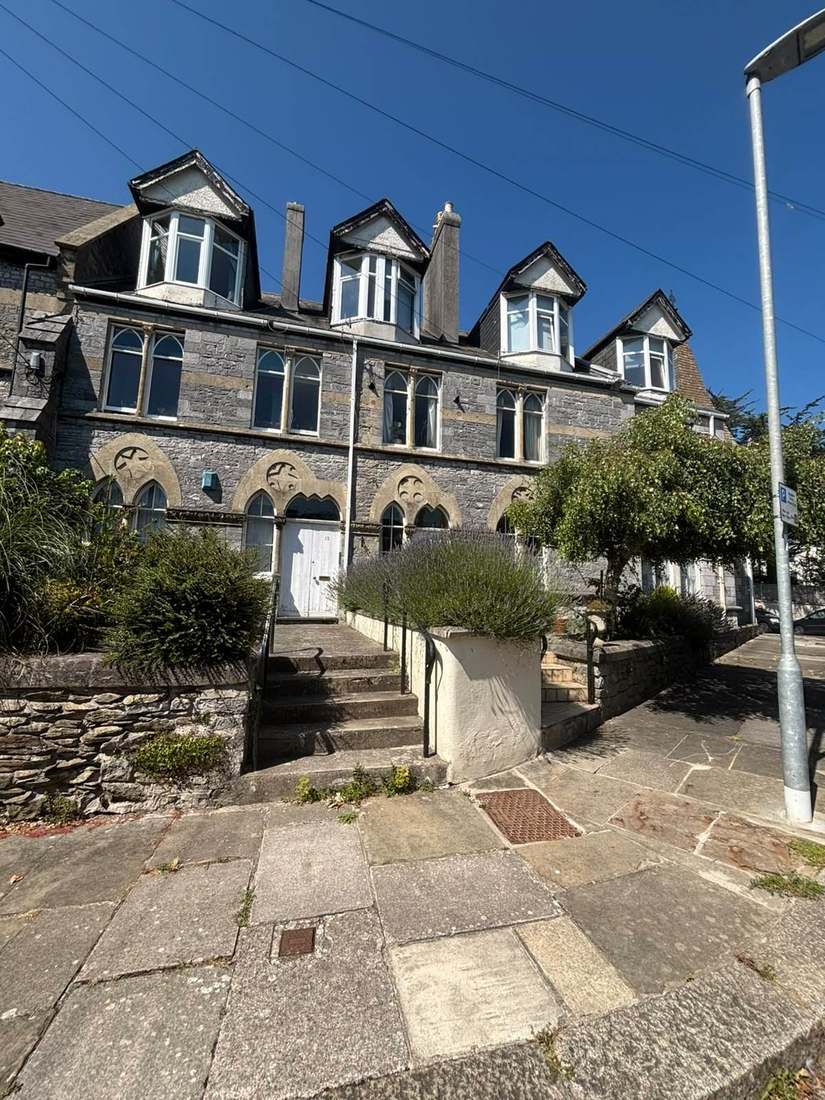
The council publishes its listed building numbers area by area. The town centre area contains around 150 statutorily listed buildings covered by 105 list entries, with 13 more on the local list. Sid Vale holds some 46 listed buildings across 25 list entries, and Elysian Fields some 24 across 13 entries. The distinction between buildings and entries matters on a block. One entry can cover a whole terrace, so a single consent decision can reach several flats at once.
Class 2 in Town, Class 4 on the Valley Sides
Class 2 of 6 over the town centre, where the maximum radon potential is 1 to 3 per cent of homes above the action level. Squares on the valley sides rise to class 4 at 5 to 10 per cent. Measurement is advised at both, so a block anywhere in the town should have radon tested, starting with ground floor flats and communal areas.
Two Plans Decide Sidmouth Applications, Not One
Decided under the East Devon Local Plan 2013 to 2031, adopted on 28 January 2016. The Sid Valley Neighbourhood Plan covers the whole parish and was made on 7 November 2019. Its referendum on 19 September 2019 was carried by 2,140 votes to 227, 90 per cent in favour on a 19.4 per cent turnout. It forms part of the development plan, so an application here is decided against both documents. Any external scheme for a block should be checked against both before a major works specification is prepared.
Service charge or accounts query? Email accounts@
Sidmouth Questions
How Is Sidmouth's Seafront Defended?
The town is protected by five rock groynes and a raised promenade behind a seawall. A beach management plan adopted in April 2017 proposes further groynes on East Beach, shortening the Port Royal training wall and periodic shingle recycling. As at July 2026 the scheme was awaiting submission of its outline business case.
Which Conservation Area Is Our Block In?
Sidmouth has four, which the council treats separately because each has a quite separate identity: the town centre and seafront, Sid Vale, Elysian Fields and Bickwell Valley. Sid Vale was first designated in 1975, Elysian Fields in January 1977 and Bickwell Valley in 1978, and the town centre designation was amended in January 1977.
Is Radon Measurement Advised in Sidmouth?
Yes. The town centre is class 2 of 6, where the maximum radon potential is 1 to 3 per cent of homes above the action level. Squares on the valley sides rise to class 4 at 5 to 10 per cent. Measurement is advised at both, so a block anywhere in the town is worth testing, starting with its communal areas.
Nearby Areas
Talk to Us About Your Building in Sidmouth.
A free, no-obligation proposal, written so it can be circulated to a board.