
Block Management in Exmouth
Block, estate and leasehold management for Exmouth. Compliance is tracked against East Devon District Council and the county above it. Marine-exposed stock is surveyed on a shorter interval and funded from what the surveys find. Roughly 53 miles from our office.
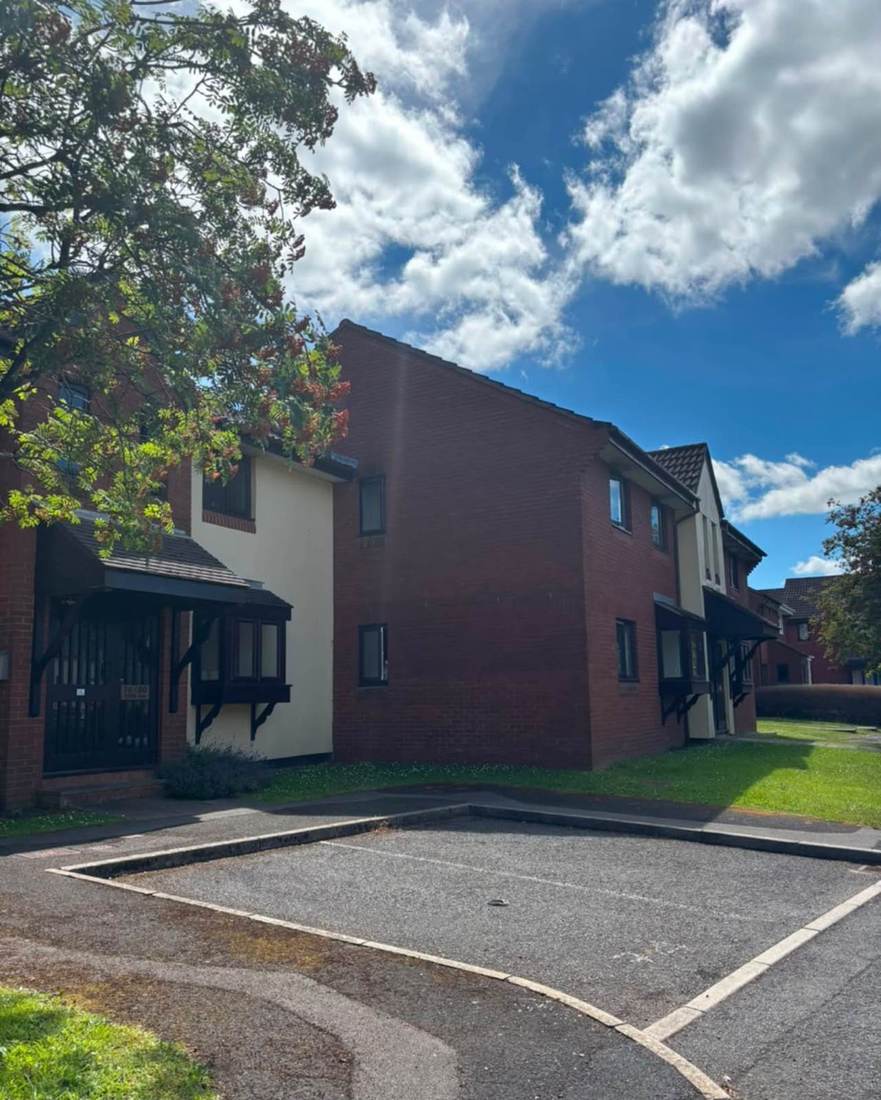
Managing a Block in Exmouth at a Glance
- Local authority
- East Devon District Council
- Authority type
- District, under the county council
- Building control
- East Devon District Council Building Control
- County
- Devon
- Fire and rescue service
- Devon and Somerset Fire and Rescue Service
- Water and sewerage
- South West Water
- From our Plymouth office
- Approx. 53 miles by road, about an hour
- Setting
- Coastal
Who You Deal with in Exmouth
A block in Exmouth deals with East Devon District Council for building control and planning, with the county council above it. Fire safety in the common parts is enforced by Devon and Somerset Fire and Rescue Service. Communal water and sewerage is South West Water.
The Residential Stock in Exmouth
Exmouth's flat stock is unusually conversion-heavy. Across the five Exmouth wards at the 2021 Census, 3,829 of 15,998 households were in flats, and 1,141 of those, nearly a third, were part of a converted or shared house. The council's own appraisal notes that the Beacon and Louisa Terrace contain hotels and holiday flats alongside private dwellings, with garden flats at basement level to the rear reached from Beacon Place. Across 16,002 households in the built-up area, 14.6 per cent are in purpose-built blocks and 7.1 per cent in a converted or shared house, the latter being 2.2 times the East Devon average. The concentration is extreme within the town: Exmouth Town ward is 19.6 per cent converted or shared house, nearly one household in five, against 0.6 per cent in Exmouth Brixington, a factor of thirty-three inside the same town, while Exmouth Littleham is 30.7 per cent purpose-built flats. The council's own conservation area appraisal describes in words what the census shows in numbers, recording that several of the former nineteenth and early twentieth century villas have been demolished and replaced with large apartment blocks on an increased footprint, with a significant cumulative impact on prominent skylines and intimate streetscapes.
Coastal Exposure in Exmouth
Exmouth sits at the mouth of the Exe estuary, where the estuary meets the English Channel.
Standards classify a high-salinity coastal atmosphere as C5-M, very high marine, in which unprotected steel loses more than 80 micrometres of thickness in its first year against as little as 1.3 inland. Balustrades, railings, fixings and walkway structures are what that costs an Exmouth block, so we survey them on a shorter interval and fund the reserve fund from what the surveys find.
Flood Risk in Exmouth
A 12 million pound Environment Agency tidal defence scheme completed in 2022 cut the annual chance of tidal flooding from 4 per cent to 0.5 per cent for over 1,400 homes and 400 businesses. The Environment Agency is explicit that the scheme reduces the chance of flooding from the sea but that river and surface water risk remains. Its flood warning area names the streets: the docks, Camperdown Terrace, Victoria Road, Marine Way, Exeter Road, the Strand, the Parade and the Esplanade. The South Devon coast at Exmouth warning area has 88.1 per cent of its extent inside the town, the highest containment of any coastal flood area measured anywhere on this site, and it names the streets: the docks, Camperdown Terrace, Victoria Road, Marine Way, Exeter Road, the Strand, the Parade and the Esplanade. Four further areas are near the town without being contained in it. One point worth stating because it is counterintuitive for a town at the mouth of a major estuary: Exmouth has no overlap at all with the Lower Exe fluvial alert area, so its flood exposure here is tidal and coastal rather than fluvial.
The cost lands on the insurance schedule and on the reserve fund long before any water does.
Conservation Areas and Listed Buildings in Exmouth
East Devon has 33 conservation areas. Exmouth's three were designated in 1973 for Louisa Terrace and the Beacon, 1973 for Bicton Street and 1986 for Albion Street and Windsor Square. The register records one conservation area for Exmouth, designated in March 1973 and covering 38.9 hectares almost entirely within the town, but the council's own appraisal describes the position differently and more usefully: it states that Exmouth has three separate conservation areas, Louisa Terrace and The Beacon and Bicton Street both designated in 1973, and Albion Street and Windsor Square designated in 1986. The appraisal also gives a figure the register cannot: 134 individual listed buildings within the conservation areas, appearing as 60 separate list entries, split 41 buildings in Louisa Terrace and The Beacon, 41 in Bicton Street and 52 in Albion Street and Windsor Square. East Devon publishes five separate mapped document sets for each of five named character areas here, covering historic building character, important features, detracting features and roof and wall materials, which is 25 mapped documents for one town and more than any other place covered on this site. Lympstone next door is a separate designation and not part of Exmouth.
The council's appraisal records 134 individual listed buildings inside the three conservation areas, covered by only 60 separate list entries. A single entry frequently covers a whole terrace, so one consent decision can affect several flats at once. 117 entries on the National Heritage List fall inside the built-up area, one Grade I and three Grade II*. The distribution is the opposite of the usual pattern and worth stating plainly: Exmouth's only Grade I building, A La Ronde, is inside the town but outside the conservation area, as are two of the three Grade II* buildings, the parish church of St Margaret and St Andrew and The Barn. Only Holy Trinity is inside it. So the conservation area and the highest-graded heritage barely overlap here.
Consent has to precede the Section 20 specification, not follow it, or leaseholders are consulted on work that cannot lawfully be done as described.
Radon in Exmouth
Exmouth is the only town covered here where the national advice is not to measure. A live query at the EX8 1AL postcode centroid returns band 1 of 6, the lowest on the map: all parts of the square sit below 1 per cent of homes at or above the action level, and UKHSA's stated advice for this band is that radon measurement is not advised. Exmouth returns the cleanest radon reading recorded anywhere on this site. The lowest band covers 99.9 per cent of the built-up area, where the published wording is that all parts of the square are in the lowest band of radon potential with under 1 per cent of homes at or above the action level, and the advice given is that radon measurement is not advised. It is the only place covered on this site where that advice applies across essentially the whole town. Set against St Austell in this same group, which reads the top band across 100 per cent of its area, the two are the extremes of the entire dataset.
That is national advice about the ground, not about the building. The same map excludes basements, cellars and underground spaces at every band, so an enclosed plant room, undercroft or lower-ground flat is still worth a look even here, and whatever is found belongs with the compliance record.
Planning Policy That Affects Flats in Exmouth
Exmouth is the deliberate exception among the coastal towns covered here. Its neighbourhood plan, made on 11 April 2019 after 87.62 per cent voted for it, records that the town does not have the disproportionate growth in second homes seen in other seaside towns, commits only to monitoring the question, and imposes no principal residence requirement. Conversion is governed instead by policy H3 of the adopted local plan, which allows existing dwellings and other buildings to be converted to flats inside a built-up area boundary provided character and amenity are not materially harmed and parking, cycle storage and refuse storage are adequate. A replacement plan running to 2042 has been through two publication consultations. Decided under the East Devon Local Plan 2013 to 2031, adopted on 28 January 2016, which includes two Exmouth-specific proposals maps, with a replacement for 2020 to 2042 in preparation. The Exmouth Neighbourhood Plan was made on 11 April 2019 following a referendum on 21 March 2019 in which 87.62 per cent of those voting were in favour, on a turnout of 15.49 per cent. East Devon has published no Article 4 directions to the national register, so no position on those is asserted here in either direction.
Policy in an adopted plan is not guidance. It is what the application is decided against, and a consent granted under the lease does not substitute for it or vice versa.
Empty Flats and Second Homes in Exmouth
East Devon has charged a 100 per cent second homes premium since 1 April 2025 and a long-term empty premium since 1 April 2024, at 100 per cent from one to five years, 200 per cent from five to ten and 300 per cent beyond ten. Limited exceptions became available from 1 April 2025 for property being actively marketed, undergoing major repair, or recently subject to probate, which is the exception most often relevant to a flat in a block.
None of this is a service charge matter and we do not bill it. It is here because a premium is the first thing a director gets asked about after a probate flat sits empty, and the answer differs by council rather than by county.
Local Government Reorganisation in Exmouth
On 16 July 2026 the Secretary of State decided to reorganise local government across Devon, Plymouth and Torbay into four unitary councils, replacing Devon County Council and its eight districts. Elections to the new councils are due in May 2027 and they are to be implemented by April 2028, through a Structural Changes Order subject to Parliamentary approval. Until then the existing county and district structure stands.
The obligations in the lease and in statute do not change. What changes is the body an application goes to and the authority that enforces housing standards, so compliance records and planning history need to be in order before the transfer rather than after it.
Changing Managing Agent in Exmouth
Two questions stall most boards: who has authority to decide, and what happens to the money. The articles answer the first, the management agreement's notice clause the second. On Exmouth heritage stock the consents history is what most often turns out to be incomplete, and its absence resurfaces later as a planning problem.
See the handover sequence in full, and our fees, which are a fixed annual amount with no commission on contractor work.
What Else Changes About Managing a Block in Exmouth
- Nearly a third of Exmouth's flats are in converted or shared houses, which usually means shared demises and non-standard fire compartmentation.
Going Deeper in Exmouth
Towns and Villages We Cover from Exmouth
Lympstone, Budleigh Salterton, Woodbury, Littleham, Withycombe Raleigh.
Service charge or accounts query? Email accounts@
Exmouth Questions
Which Council Does a Block in Exmouth Deal With?
East Devon District Council Building Control. A district council, with the county council above it for county functions.
Who Enforces Fire Safety in the Common Parts in Exmouth?
Devon and Somerset Fire and Rescue Service, as the enforcing authority for the Fire Safety Order.
Who Supplies Water to a Development in Exmouth?
South West Water. A communal supply is the building's contract, not a leaseholder's, so report a loss to common parts through us.
Is Exmouth Too Far from Your Plymouth Office?
It is about 53 miles, about an hour. Distance changes how site visits are scheduled, not whether they happen.
Do We Need Consent for External Works in Exmouth?
On a listed building or in a conservation area, yes, for much that would be permitted elsewhere. Get it before the Section 20 specification, not after.
Is the Council for Exmouth Changing?
Yes. Reorganisation was decided in July 2026 and takes effect by April 2028. The lease obligations do not change; the authority you file with does.
Nearby Areas
Talk to Us About Your Building in Exmouth.
A free, no-obligation proposal, written so it can be circulated to a board.